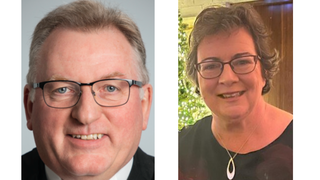
As volunteers with our Patient and Public Partnership (PPP), Noeleen McHugh and Liam Halloran are helping to bring the patient and public voice into discussions about how artificial intelligence (AI) may be used in screening services in the future.
To mark National Volunteering Week 2026, they share why they got involved and why public involvement matters when introducing new technologies such as AI.
Getting involved
Noeleen became involved with our PPP after her husband was diagnosed with Stage 3 bowel cancer through BowelScreen, despite having no symptoms.
“I was surprised by the low participation rates in bowel screening and wanted to help encourage more people to take part.”
Liam says his own experience of using Diabetic RetinaScreen and seeing relatives benefit from screening services encouraged him to volunteer.
“The PPP is a great way to bring the patient perspective into important decisions.”
Using their experience and skills
Noeleen brings extensive professional experience in governance, innovation and national IT projects.
“I had responsibility for delivering over 50 national IT projects during my career.”
Liam says his strengths lie in helping make complex issues easier to understand.
“I’m good at spotting where decisions might affect people in ways that aren’t immediately obvious.”
Bringing the patient perspective to AI
As members of the National Screening Service AI Strategic Advisory Committee, both say their role is to help ensure the patient perspective remains central to discussions.
“The involvement of PPP representatives from the beginning is crucial for building trust, protecting data and improving patient outcomes,” says Noeleen.
Liam says much of the role involves understanding technical discussions and translating them into real-world impacts for people. He says: “We make sure the human side is considered - things like trust, fairness, clarity and communication.”
Learning and contributing
Both say they are enjoying learning more about AI and screening services through their involvement.
“I’ve appreciated learning about both the opportunities AI can offer and the importance of addressing possible risks,” says Noeleen.
Liam says he values being involved in discussions about future services, saying: “It’s great to work with people who care about getting these things right.”
Feeling supported, included and valued
Both volunteers say the committee works hard to make discussions accessible and inclusive.
“We were given access to a training programme which was very beneficial,” says Noeleen. “I feel valued as an equal member of the Committee and my role representing patients is appreciated.”
Liam agrees. He says: “If I have questions, someone always takes the time to break it down. It’s a very open and supportive environment. I feel good and appreciated when my input is asked for, is listened to and is reflected in the work.”
Why public involvement matters
For both volunteers, involving PPP representatives in AI discussions is essential to building public understanding and trust.
“My role is to ensure patient needs, safety, privacy concerns and values are woven into how AI is used,” says Noeleen.
Liam says public involvement helps keep discussions grounded in real experiences.
“AI will only succeed if people feel it’s being introduced with them, not at them.”
Building trust in AI together
Dr Alan Smith, Consultant in Public Health Medicine and sponsor of the AI project, says the involvement of PPP representatives has shaped how the committee approaches its work.
“Noeleen and Liam have been central to how this committee thinks. They keep us focused on the people who will actually experience these changes.”
He says their perspectives have helped the committee think carefully about communication, trust and public understanding of AI.
“They remind us that how we introduce a new technology matters as much as the technology itself.”
Dr Smith says involving patient and public voices from the beginning leads to better decisions and stronger public trust.
“By involving public and patient voices from the very beginning, we make better decisions, communicate more clearly and build the kind of trust a national screening service depends on.”