
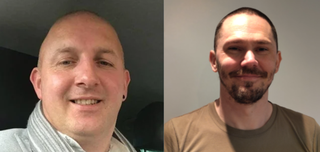
As part of Men’s Health Week, we speak with Hugh Friel and Mark Kirwan who work in their communities to promote men’s health and wellbeing.
Hugh Friel has been a Roma Health Coordinator for the North-West region, covering Sligo, Leitrim, and Donegal, since 2022. In this role, he works to promote access to HSE services for the Roma community, fostering trust, collaboration and mutual understanding.
Mark Kirwan is a Clinical Nurse Manager in South-East Community Healthcare in Waterford City. He works with people living in International Protection Accommodation Service centres, and mostly with people from Ukraine. As part of a group of social inclusion nurses across the country, Mark has been part of a screening training initiative. He runs GP clinics, promoting screening and vaccine catch-ups.
About their work
Hugh has been actively involved with the Donegal Travellers Project for over 25 years, a group that we have worked with through our Community Champions project. His work involves lots of one-to-one family and group work, to remove barriers to healthcare that can relate to languages and discrimination.
He says that communication difficulties often prevent Roma people from taking part in screening. “Some don’t speak English, so they don’t understand the leaflets or letters that are sent to them,” he says. “I support Roma people going for health appointments, often by making sure they have an interpreter with them on the day.”
Hugh often uses WhatsApp messages with the Roma community. “Video has a bigger impact than written materials,” he says. “Videos are very helpful when they are translated into Romani.”
Communication is a big part of Mark’s job too. He promotes BowelScreen and Diabetic RetinaScreen to the men he works with, and links them with public health workers. “I look after people from many parts of the world in congregated settings, as well as private homes,” he says. “And I link with them until they get into mainstream services.”
Mark says that a highlight of his work is being able to give people time. “We notice in the mainstream service that people feel they don’t have the time to engage their GP,” he says. “With our GPs, there is very little time restriction. We try to give a person half an hour each time they visit. And I organise interpreter services for those visits.”
Promoting screening
As part of his work, Mark promotes screening in his interactions with people in clinics, accommodation centres and outreach clinics.
“I am often working with people who come from countries where there are no national screening programmes, so it’s important that I explain why screening is important, and encourage them to take part,” he says.
“Among the people I look after, bowel screening has a poor uptake. I’m not sure why. It possibly relates to our cohort being very mobile and moving frequently,” says Mark. “The most common reasons I have heard for men not taking part in screening are ‘not at the moment’, and ‘maybe another time’.”
Men’s Health Week
For Men’s Health Week, Hugh is telling the men in his groups: “If you feel something is wrong, or feel a lump, or things are not what they should be, do something about it. Seek help.”
But, he says, Men’s Health Week isn’t enough: “Men’s health isn’t just one week. It needs to be all year round.”
Mark is reminding men during Men’s Health Week that screening is a simple process and that it can help them in case something is wrong. He says: “My message is ‘don’t put it off. Look up the relevant stuff online and see why it’s recommended. Screening is not painful’.”