
Cervical cancer is one of the few cancers that we have the tools to eliminate as a public health problem.
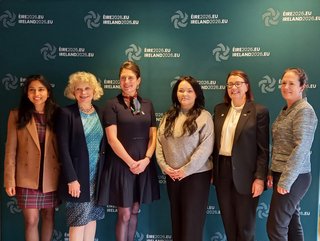
That was the focus of a breakout session at Maximising EU potential through Health: Securing Our Future Through Prevention, Innovation and Equity, held as part of Ireland's Presidency of the Council of the European Union on Monday 16 November 2026.
The session was chaired by Professor Nóirín Russell, CervicalCheck Clinical Director and Chair of Ireland’s HSE Cervical Cancer Elimination Strategy Group. She highlighted differences in cervical cancer rates across Europe, ranging from 5 to 25 cases per 100,000 women, and invited countries to learn from each other about how to make faster progress towards elimination.
From evidence to action
Dr Linda Eckert, Professor of Obstetrics and Gynaecology and Adjunct Professor of Global Health at the University of Washington, focused her keynote address on turning the possibility of cervical cancer elimination into a reality.
We already know what causes cervical cancer and have the tools to prevent it. HPV vaccination can prevent infection, screening can find changes before they develop into cancer, and early diagnosis and treatment can save lives. The challenge now is putting these tools into practice and making sure they reach everyone who can benefit.
Equity must be central to elimination
Dr Eckert highlighted how lack of money, the cost of being absent from work, and inadequate transport impact on access to healthcare, as well as how stigma and misinformation can make it harder for people to access prevention and care.
She stressed the importance of investing in prevention and expanding access through approaches such as HPV self-sampling. A central message from her address is that data and science alone will not eliminate cervical cancer. Advocacy and the voices and experiences of women affected by the disease have an important role in turning evidence into action.
Listening to women’s experiences
Kim Hanly, Founder of Cervical Cancer Awareness Ireland and a cervical cancer survivor, brought the perspective of a patient and public advocate. She spoke about being diagnosed with cervical cancer at 26, after initially being told she was too young to have the disease. Her experience led her to become an advocate for cervical cancer prevention and HPV vaccination.
Kim spoke about being a mother of two boys. HPV vaccination was not available in Ireland when she was diagnosed, but by the time her sons reached secondary school, the HSE was offering the vaccine to both boys and girls. She had already talked to them about HPV and the cancers vaccination can help prevent for both men and women.
Kim also highlighted an aspect of cervical cancer that can sometimes be overlooked: life after treatment. She continues to experience long-term effects from her treatment and has needed further surgery. Her experience shows why people’s stories need to sit alongside data and science when we talk about elimination.
Rachel Kenna, Chief Nursing Officer at the Department of Health explained how listening to women has become central to the development of health policy in Ireland. She spoke about the progress made through a more coordinated approach to women’s health. People’s experiences can help us develop policies and services that respond to their needs, particularly for those who face barriers to vaccination, screening, treatment or follow-up care.
Using evidence to find and close the gaps
Dr Arunah Chandran, Public Health Officer at the International Agency for Research on Cancer, said we already know much of the science behind cervical cancer elimination. The challenge is putting that evidence into practice to achieve the World Health Organization targets.
Better data and monitoring can help countries identify gaps, focus action where it is most needed and measure progress towards elimination.
Communication as an enabler
Communication about HPV vaccination and cervical screening was another important theme.
Dr Chandran stressed the importance of understanding the needs, experiences and beliefs of the people we want to reach. Providing access to screening, including HPV self-sampling, is one part of the solution. People also need clear information and support to take part and access any follow-up care they may need.
Communication about HPV vaccination needs to be clear, balanced and culturally appropriate. And good communication needs health systems and services that support people to act on the information they receive.
Learning from progress in Sweden
Miriam Elfström, Head of Unit at the Center for Cervical Cancer Elimination at Karolinska University Hospital and Research Coordinator at Karolinska Institutet, shared Sweden’s experience.
Sweden’s approach brings together HPV vaccination and wide-scale HPV-based screening, including self-sampling, making screening easier and more accessible. Its HPV-FASTER strategy targets young adults born between 1994 and 1999 with free catch-up HPV vaccination alongside screening.
Equity is central to the approach, with a focus on low-uptake areas and people who are less likely to take part in vaccination and screening, including migrants and sex workers. This helps to drive progression towards elimination across all population groups.
Sweden’s experience highlighted a consistent message from the session: having effective tools is only the starting point. Countries need practical and equitable ways to put them into action so everyone has the opportunity to benefit.
What needs to happen next
We already know many of the actions needed to eliminate cervical cancer. The challenge is moving from ambition to action and considering what countries can do together to accelerate progress.
Key takeaways included:
- We already have the tools. Now we need to put them into action. Vaccination, screening and treatment need to reach everyone who can benefit.
- Elimination must include everyone. Progress needs to reach all population groups.
- Policy needs to recognise the people we need to reach. Recognising the needs of different population groups in policy helps us develop targeted approaches that reach more people.
- Data can show us where we need to do more. Better data can identify gaps and help target action.
- Lived experience should help shape services and policy. Listening to people affected by cervical cancer can help make services more responsive to their needs.
- People may need help to navigate care. Patient navigators can help people understand what happens next when further tests or care are needed.
- Changes to screening need clear communication. As cervical screening evolves, we need to explain what is changing, why it is changing and the evidence behind those decisions.