
By Susan Donlon, Communications Team, National Screening Service
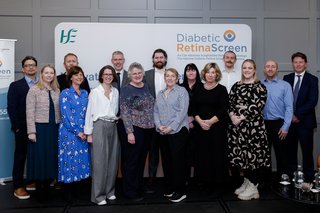
Innovation and advancements in diabetic retinopathy screening and treatment was the focus of our recent international conference in Dublin. The event brought together national and international experts to share insights, discuss challenges, and explore new technologies and therapies aimed at improving eye care for people with diabetes.
Diabetic RetinaScreen - a growing programme with big impact
The conference was opened by Chief Executive of the National Screening Service, Fiona Murphy, who welcomed attendees and set the stage for a day of collaboration. Fiona outlined the journey of Ireland’s Diabetic RetinaScreen programme, which began in 2013, screening 6,000 people in its first year. By 2023, that number has grown to over 121,000 people with diabetes screened annually.
Diabetic RetinaScreen, Fiona said, was the first eye screening programme in the world to integrate screening and treatment, made possible by the ophthalmology clinics within our acute hospitals, bringing benefits for both screening participants and clinicians. “We are grateful to our clinical colleagues whose teams have made the delivery of this unique programme possible.”
Fiona said one of the main success factors for Diabetic RetinaScreen has been its accessibility, with over 150 community-based screening locations nationwide. Fiona thanked our screening providers, both past and present, for helping to embed Diabetic RetinaScreen as part of Ireland’s health service.
“Quality assurance is at the heart of our work in the National Screening Service,” Fiona said. The programme's commitment to high standards in screening and treatment, along with our focus on minimising harm and maximising public health benefits, ensures that we continue to build public confidence and reduce preventable sight loss, she said.
Global and Irish perspectives on diabetic retinal screening
The conference featured presentations from both Irish and international experts. Prof Simon Harding, President of the European Association for the Study of Diabetes Eye Complications, emphasised the global importance of diabetic retinal screening, particularly as the prevalence of diabetes continues to rise worldwide. He highlighted that “screening is key to prevention”, noting that those who do not attend screening are most likely to present with advanced eye disease.
Mr Robert Acheson, Consultant Ophthalmic Surgeon and Clinical Lead at NEC Care, traced the history of diabetic retinopathy screening across Europe and Ireland, showcasing the positive impact screening programmes have had in reducing sight loss.
Prof David Keegan, Clinical Lead for Diabetic RetinaScreen, shared how Ireland's programme has evolved since its inception in 2013. He celebrated the programme's development and innovation, including the introduction of a digital surveillance pilot in 2017, a two-year screening pathway in 2021, and a new initiative in 2023 to provide priority eye screening for pregnant women with diabetes in partnership with maternity hospitals – an example of the programme’s commitment to improving equity and accessibility.
The role of artificial intelligence in screening
Dr Alan Smith, Consultant in Public Health Medicine, National Screening Service, discussed the future role of AI in screening and the potential for improved accuracy and targeted treatment plans. He said AI can help reduce error, not eliminate it. “Our experience in screening of good governance and quality assurance will help to ensure we use AI safely and effectively”, he said.
Prof Simon Harding returned to the stage to present on the role of comparative AI in screening, discussing its cost-effectiveness while improving outcomes.
Prof Adnan Tufail, Consultant Ophthalmologist at Moorfields Eye Hospital in London, gave a critical analysis of different algorithms used in AI-based diabetic retinal screening, reminding us that AI must always meet universal screening objectives - that we do more good than harm, at a reasonable cost.
Prof Catherine Egan, Consultant Ophthalmologist at Moorfields Eye Hospital, explored the risks of bias in AI image recognition, suggesting ways to address these issues; while Ms Kate Coleman, Ophthalmic Surgeon, presented on the application of AI to non-diabetic retinal diseases.
The future of treatment - therapies and surgical advances
As the conference moved into its final sessions, the focus shifted to therapies and surgical treatments for diabetic eye disease.
Ms Angela Rees, Consultant Ophthalmologist and Clinical Director at Moorfields Eye Hospital, discussed intraocular therapies and the role they play in treating diabetic eye disease. She shared the potential for several emerging treatments to improve patient outcomes in the coming years, with improved efficacy and better durability now possible.
Dr Aaron Donnelly from the Irish College of Ophthalmologists presented findings from an Irish study on the effectiveness of Ozurdex, a treatment for diabetic macular oedema (DMO), particularly in patients who had previously been treated with anti-VEGF agents.
Mr Robin Hamilton, Consultant Ophthalmic Surgeon, focused on the role of laser therapy in managing diabetic retinopathy, now and in the future. A mainstay in therapy for many years, new paradigms and technology are improving the range of therapeutic options available.
Lastly, Mr Alistair Laidlaw, Consultant Ophthalmologist at Guy’s and St Thomas’ Hospital in London, explored the expanding role of retinal surgery in the treatment of diabetic eye disease, providing insights into the latest surgical techniques and innovations - specifically, is there a role for early surgical intervention in diabetic retinal disease and supplementary pre-op anti-VEGF therapy.
Poster Presentations
The display of poster presentations showcased projects and research on participation in diabetic retinal screening, advancements in the use of AI, and quality improvement and sustainability. The winning poster went to author Danyal Memon for a study exploring reasons why pregnant women with type 1 or type 2 diabetes had not previously attended the Diabetic RetinaScreen programme.
Closing the conference, Prof David Keegan thanked all our presenters, moderators, partners, and delegates. He said he’s looking forward to the next stage of the development of Ireland’s Diabetic RetinaScreen programme, citing our constant desire to do better and to contribute our learnings to other parts of the world.
Keep up to date at screeningservice.ie