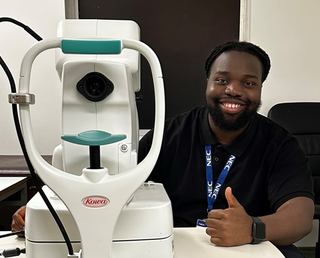
For Men’s Health Week, we talked to Kevin Edovia, a Dublin-based Diabetic Retinal Technician / Screener with NEC Care Ireland, the company that provides eye screening services for our Diabetic RetinaScreen programme throughout Ireland.
What is your typical day as a screener?
I start around 9am, getting the room set up for our screening participants. When everything is ready, we start checking people in for their screening tests at their appointed times.
I work in clinics in Castleknock, Drogheda, Santry, Tallaght and Thomas Court. I screen around 20 to 30 people each day, and I usually finish around 5pm.
What happens during the screening procedure?
First, I meet the person who has come for screening, and I tell them about the diabetic retinopathy eye screening process, and let them know what they can expect.
My goal is to help people to be as relaxed as possible. The more relaxed they are, the easier it will be for me to take clear images of their retinas (the area in the back of their eyes). We talk about their eye history, and I ask them if they have noticed any changes in their sight, especially any kind of deterioration.
When they are ready, I put drops in their eyes that dilate their pupils, making it easier to take photographs of their retinas. They wait outside for around 20 minutes while the drops take effect. Then, I call them back in.
I photograph their retinas using a special camera. The camera does not touch your eyes. I make sure the images are as clear as possible, and then they are forwarded to our grading team. I explain that we will be in touch in around three weeks with the results of their screening test.
When we send their results, we let them know if we have found any changes in their retinas, if they need another appointment, or if they will be called back for screening again in a year or two years.
What is your message for men during Men’s Health Week?
We know that men will sometimes neglect their health. It’s important not to let this happen when it comes to dealing with diabetes and your sight. So, I will always say “when you get your eye screening appointment, make the right choice for your eye health and choose screening”.
How do you work to make sure people have a good experience when they come for screening?
I hope that my approach is caring and compassionate, especially if the person is nervous. If it is their first time being screened, I explain to them that the procedure shouldn’t be painful. And I reassure them that if they have any concerns, they can ask us to stop, and we will, immediately.
If someone does not speak English, we arrange for a translator to join us on the phone. They translate my questions and requests, and any questions or concerns the person has. It works well.
We accommodate people who have disabilities. If a person has a physical disability, I work with them to find out what I can do to make screening as comfortable for them as possible.