
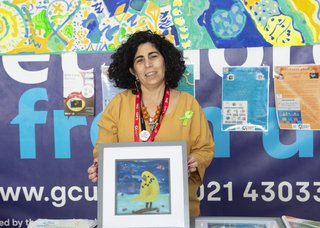
How one community champion is using her own experience of breast cancer to support migrant women to take part in breast screening
When HSE community worker Rola Abu Zeid O’Neill joined our Community Champions Programme, her goal was simple: to help women in her community understand why screening matters.
“I wanted to help other women understand how important early detection is,” says Rola. “So many times, we hear about someone being diagnosed with stage 3 or 4 cancer - and by then, it’s often very serious. I wanted our community to know that screening can make all the difference.”
What she didn’t expect was that this work would end up saving her own life.
A life-changing discovery
In July 2024, Rola noticed a small change in the shape of her breast - something she recognised immediately from the training and workshops she had attended as part of the Community Champions Programme.
“I went straight to my GP and within days, I saw a surgeon,” she says. “They told me it was stage 2 breast cancer. Because I acted quickly, it hadn’t spread. I am so grateful - having had the training about what screening is, and the importance of looking out for symptoms between appointments, meant I knew what to look for and had the confidence to act straight away.”
Rola was 51 when she was diagnosed. “I’ve always been healthy – I don’t smoke or drink, I cook fresh food, and I keep active,” she explains. “I’d had mammograms before because I have a family history of breast cancer, as well as regular cervical screening.”
She had even called BreastCheck earlier that year to free up an appointment for someone else. “I’d had a mammogram in the past year and it was clear, so I told them to give my appointment to another woman. I stayed alert to symptoms, and that’s why I went to my GP.”
Turning experience into education
Rola’s diagnosis changed her life and it also gave her a new strength and purpose in her work.
“Now, when I speak to migrant women – from Syria, Iraq, Egypt, Yemen, Palestine and other countries – I share my experience. I tell them: ‘I’m a healthy woman, and it still happened to me. Please go for your BreastCheck appointment when you are invited.’”
Many of the women she works with are private about their health. “They might not ask questions in front of others, but later, after a session, they’ll text or call me. That’s why small group sessions are so important,” Rola explains.
Rola is Palestinian and Arabic is her mother-language. She often runs the sessions in Arabic to make sure everyone feels comfortable and informed. “We create a space where women can talk openly. I help guide them through what to expect at their screening appointment and explain that we can provide a female interpreter during their appointment.”
Breaking down barriers
Rola says that some of the barriers women face are practical. “Childcare, transport, or not having a support network here in Ireland – these can all make it harder to attend screening,” she says.
“That’s why, through the Community Champions Programme, I’m working with BreastCheck in Cork to arrange screening sessions at times that suit mothers, for example while their children are in school. We want to make it as easy as possible. If someone asks me to go with them to their appointment, I do.”
Rola also connects screening to faith and culture. “I talk about how self-care and health are part of our faith. Linking screening to our beliefs helps women see attending appointments not as something shameful, but as something honourable.”
Inspiring others
Rola’s message now reaches far beyond her local community. She talks to her own family, cousins and friends, encouraging them to attend screening too.
“When I was diagnosed, it was a difficult few months - I had treatment and two surgeries, and it wasn’t easy. But I stayed positive. I saw cancer not as the end, but as a new beginning – a chance to think about my priorities and my health,” she says.
“Being part of the Community Champions Programme didn’t just help me educate others – it helped save my life. That’s why I tell women: Don’t put it off. Go for your screening appointments. Screening can save your life.”